
In a stunning development that has grabbed global headlines, the United States carried out a military strike in Venezuela, reportedly detaining President Nicolás Maduro and his wife. This action, described by U.S. leaders as a “large-scale strike,” has triggered major diplomatic reactions, speculation about strategic motives, and widespread international discussion.
Let’s break down the facts, reactions, and implications of this unfolding international event.
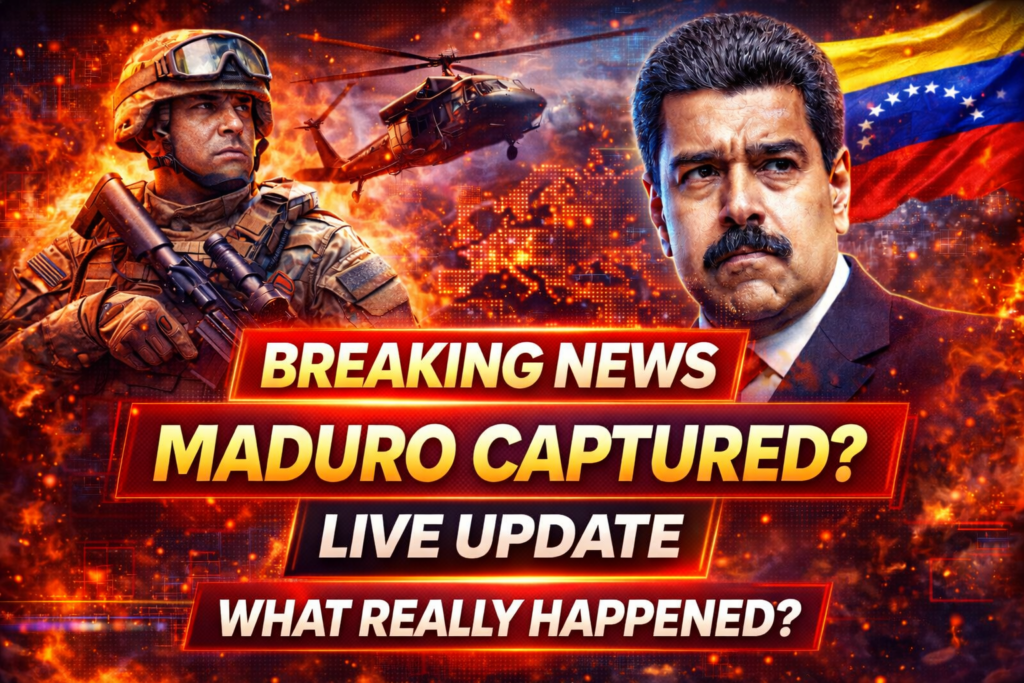
What Trump Announced — “Maduro Captured and Removed”
Former U.S. President Donald Trump held a press briefing following the operation. According to Trump:
✔ President Maduro and his wife were captured and flown out of Venezuela
✔ The U.S. conducted a large-scale military strike
✔ The U.S. plans to temporarily run Venezuela during transition
✔ Maduro is expected to face federal charges in the United States
These comments represent a dramatic escalation in U.S.–Venezuela relations and have drawn both support and sharp criticism.
Who Carried Out the U.S. Operation? Delta Force and Military Details
Sources cited by major news outlets — including CBS News — indicate that:
•The U.S. Army’s Delta Force, an elite special operations unit, led the mission
•The goal was to detain Maduro and neutralize strategic threats
•Oil and narcoterrorism charges are central to legal cases in the U.S.
While some details are still emerging, multiple sources suggest the operation was highly coordinated and swift.
Global Reactions — Support, Concern, and Backlash
This unprecedented event has triggered mixed responses around the world:
🔹 Allies have expressed concern about foreign military intervention
🔹 Human rights groups warn of instability and dangerous precedent
🔹 Some political analysts say the U.S. action could deepen regional tensions
International observers are closely watching how governments in Latin America, Europe, and Asia respond to this military escalation.
Why Venezuela’s Oil is a Major Factor
One of the most discussed aspects of the crisis is Venezuela’s vast oil reserves. Analysts believe:
•Oil resources are a key strategic consideration
•U.S. economic interests may influence intervention timing
•Securing energy infrastructure could be part of broader geopolitical strategy
Former officials and intelligence leaders have previously warned that foreign intervention can be linked to control of natural resources, especially in nations with economic turmoil.
What This Means for Venezuela’s Future
The capture of a sitting president by a foreign power opens several questions:
💥 What will replace Maduro’s government?
💥 Can this stabilize Venezuela or fuel internal conflict?
💥 How will global markets react, especially in energy and commodities?
💥 Will this lead to broader geopolitical divisions?
Experts say the coming weeks and months will be crucial for Venezuela’s political stability, economic recovery, and diplomatic relations.
The Takeaway — A Turning Point in U.S.–Latin America Relations
The events in Venezuela mark one of the most dramatic shifts in recent geopolitical history. What began as a reported military operation has quickly turned into:
📌 international debate
📌 legal and political confrontation
📌 energy and resource strategy discussions
📌 global security implications
For millions of people watching, the key question remains:
👉 How will Maduro’s removal reshape the future of Venezuela and the wider region?